68–78 cm
Male height
Official range derived from the CKU standard’s 73 cm average ± 5 cm.
An independent field guide
细狗 · 细犬
China’s slender hounds—read through landscape, working history, material culture and genetics.
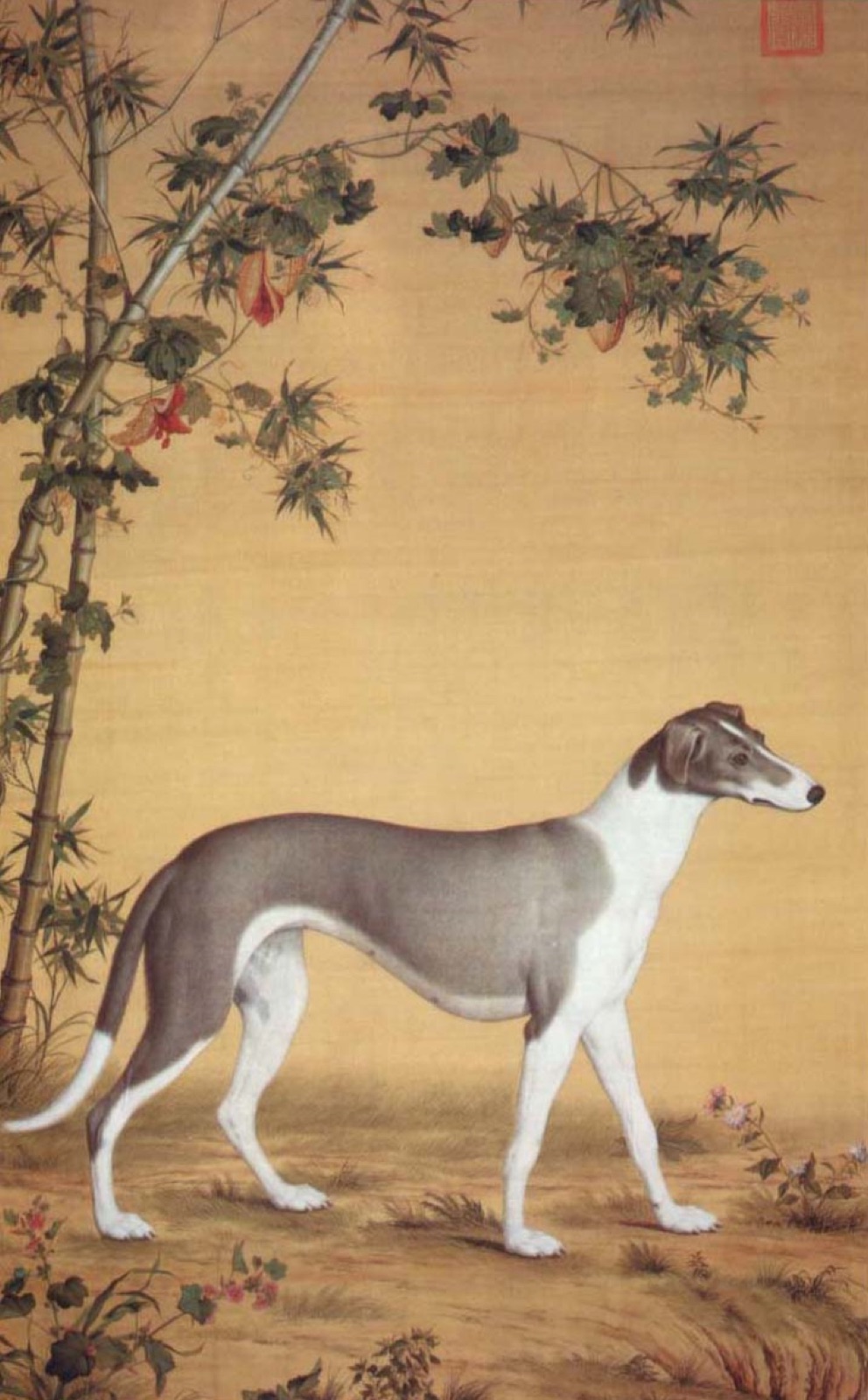
01
The short answer
Xigou (细狗 or 细犬, xì gǒu) literally means “slender dog.” It names a family of Chinese sighthound traditions, not one perfectly uniform modern breed. The best-known regional populations are associated with Shaanxi, Shandong, Hebei and Mongolia.
A note on certainty
Last reviewed 1 August 2026
The Xigou has a remarkable visual and working history. It also has an internet history full of copied claims: “2,500 years old,” “ancestor of every sighthound,” “almost extinct.” Some may contain truth; none should be repeated without qualification.
This site separates what is documented, what is plausible and what remains open. A hound in a 706 CE tomb mural is evidence of a sighthound tradition in Tang China. It is not, by itself, a pedigree certificate for a living landrace. That distinction is the basis of our editorial policy.
How this reference is publishedField notes
Shaanxi type unless noted
68–78 cm
Official range derived from the CKU standard’s 73 cm average ± 5 cm.
65–75 cm
Official range derived from the CKU standard’s 70 cm average ± 5 cm.
0.26 FROH
Highest value among 14 populations in one 2023 study; Shaanxi sample n = 12.
706 CE
Prince Yide’s dog-and-falconer panel and Prince Zhanghuai’s hunting mural.
One name, regional traditions
“Xigou” crosses geography and type. The feathered Shaanxi hound is the principal focus of this guide, but it should never stand in for the entire family.
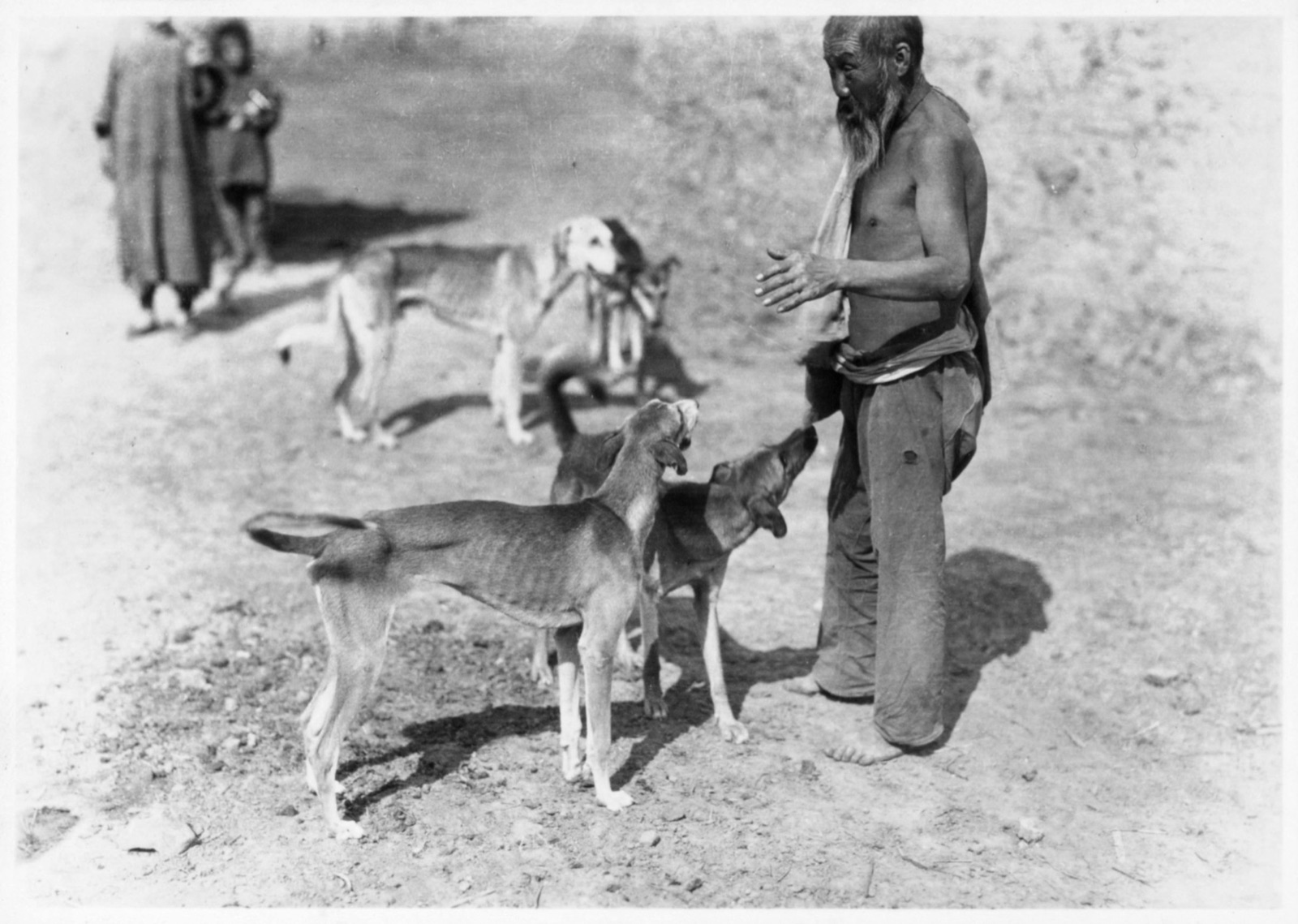
Evidence ledger
Documented
Modern genomic research includes separate Shaanxi and Shandong Thin dog populations.
Read the study notesDocumented
Prince Yide’s close dog panel and Prince Zhanghuai’s procession are securely dated; modern breed identification remains interpretive.
See the timelinePlausible
Geography, morphology and genomic affinity support the question. They do not date contact or settle its direction.
See the open questionsUnproven
No source we have reviewed justifies this sweeping claim.
Audit the sourcesReading the genomic signal
In a 2023 study of Chinese indigenous dogs, the Shaanxi Thin dog sample had the highest run-of-homozygosity inbreeding coefficient among fourteen populations. The sample was twelve dogs. Both facts belong in the same sentence.
Read the finding and its limitsReading room
Two Tang tombs, Qing tribute hounds and the breaks in between.
02The 2017 Shaanxi standard and the limits of a four-type map.
03Three studies, several metrics and no simple origin story.
04Guanzhong, working vocabulary and the modern record.
05How evidence, uncertainty and corrections are handled.
06Five original plates for geography, names, form and genomic evidence.
Plain answers
Not cleanly. Xigou is best understood as a family name for regional Chinese sighthound populations. CKU publishes a 2017 standard for the Shaanxi Xigou, while Shandong, Hebei and Mongolian traditions have different and less uniform documentary records.
No. The resemblance is real, especially in the feathered Shaanxi type, but resemblance does not establish ancestry. A 2023 whole-genome study placed seven sampled Shaanxi sighthounds close to European sighthounds while finding multiple origins and extensive admixture across sighthounds. The direction and date of gene flow remain unresolved.
Xigou (细狗, xì gǒu) literally means ‘slender dog.’ The term can refer broadly to Chinese sighthound traditions rather than to a single, uniformly standardised population.